
Why Your Backyard Feels Smaller Than It Is
Key Takeaways
A large backyard can still feel cramped when usable areas are disconnected or poorly defined.
Grade changes, awkward circulation, drainage issues, and poorly placed features can make outdoor space difficult to use.
Patios, retaining walls, steps, planting areas, and defined gathering spaces can turn disconnected portions of a property into a more functional outdoor environment.
Good landscape design considers how people move through and experience the entire property, not simply how much square footage it contains.
You Have Space. Why Does It Feel So Small?
You walk into the backyard and see plenty of lawn. On paper, there is more than enough room for a patio, seating, a fire feature, or even an outdoor kitchen. Yet when you actually try to use the space, something feels off.
The patio may feel crowded while a large portion of the yard sits untouched. A slope may separate the house from the best part of the property. An awkward transition may make the lawn feel disconnected from the patio. Drainage problems may leave certain areas too wet to use.
The exact measurement of your yard isn’t the problem. It is about the relatively small portion of a property that can interrupt the connection between the spaces you want to use.
The Space Between Matters
Outdoor living areas work best when they have a logical relationship to one another.
Consider a home with a patio directly outside the back door and a large lawn farther down the property. If a steep grade, drainage channel, or awkward transition separates the two, the homeowner may experience them as two completely different spaces. The lawn exists, but it doesn't feel like part of the outdoor living area.
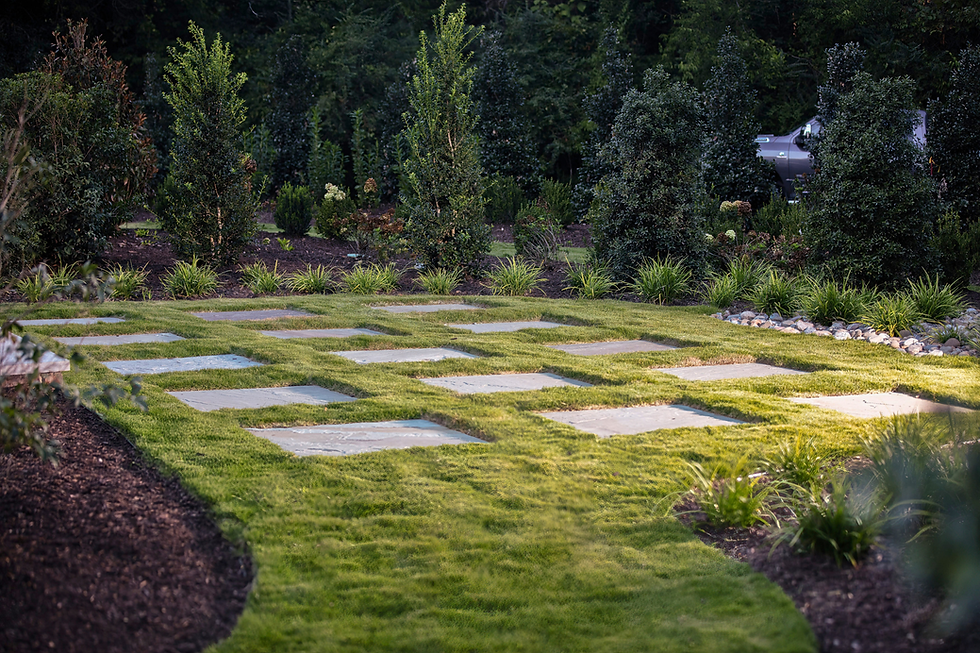
Landscape design can address the separation. A retaining wall might create a level terrace. Steps can establish a comfortable route between elevations. Plantings can define the transition without creating a visual barrier. A new patio or landing can give an otherwise unused portion of the property a clear purpose.
The solution isn't necessarily more square footage. It is more usable space.
Stop Designing One Area at a Time
One of the easiest ways to make a backyard feel smaller is to plan every feature independently.
A patio gets placed wherever there is room. The fire pit goes in another area. The outdoor kitchen is positioned for convenience. Plantings fill the remaining edges. Eventually, the property has everything you want, but the pieces don't feel connected.
A better approach considers the entire outdoor environment at once: where people enter the yard, where they naturally walk, where the sun hits, where water moves, which views should remain open, and which areas deserve definition.
That broader perspective can make a property feel more cohesive without requiring every inch to be hardscaped.
Give Each Part of the Property a Purpose
A backyard doesn't need to be filled with features to feel complete. It needs spaces that support the way you want to use it.
One area might become a dining space. Another could provide room for a fire feature and conversation. A level lawn might remain open for games, while trees provide shade along the edge. On a sloped property, retaining walls and steps may create usable terraces while also managing grade.
When each area has a clear relationship with the others, the backyard becomes easier to navigate and more enjoyable to use. You stop seeing a collection of leftover spaces and start experiencing the property as one connected outdoor environment.
Make the Space You Already Have Work for You
If your backyard feels smaller than it should, adding more features may not be the answer. The first question should be whether space is being used effectively.
At Maplehurst Outdoor Living, we look at the property as a whole—its grade, drainage, existing landscape, views, circulation, and the way you want to spend time outside. From there, the design can address the obstacles that keep usable space from feeling usable.


Comments