
The Space Between the Features Is Where the Design Happens

A patio can be beautifully constructed. A retaining wall can be expertly built. A landscape can have mature plantings, outdoor lighting, and a fire feature. Yet when those elements are placed without enough attention to what happens between them, the finished property can feel disconnected.
The difference often comes down to the spaces between the major features. These transitions determine how the landscape looks, feels, and functions as you move through it.
Key Takeaways
The areas between patios, planting beds, retaining walls, walkways, and gathering spaces influence how cohesive a landscape feels.
Transitions in grade require careful planning of steps, landings, walls, drainage, and planting.
Material changes should feel intentional and relate to the architecture and surrounding landscape.
Plantings can soften hard edges, define boundaries, frame views, and guide movement through the property.
Thoughtful landscape design considers the entire experience—not simply where individual features will be installed.
Great Design Is in the Transitions
Think about walking from your home onto a patio. The experience does not begin when your feet reach the pavers. It begins at the door, continues across the threshold, and extends through the surrounding landscape.
That transition might include a walkway, planting bed, low wall, steps, lighting, or a change in elevation. Each element influences the next. When those relationships are carefully considered, moving through the property feels natural rather than interrupted.
This is particularly important on properties with slopes or significant grade changes. Steps, landings, retaining walls, drainage, and plantings need to work together so the landscape remains comfortable to navigate and visually balanced.
Material Changes Should Have a Reason
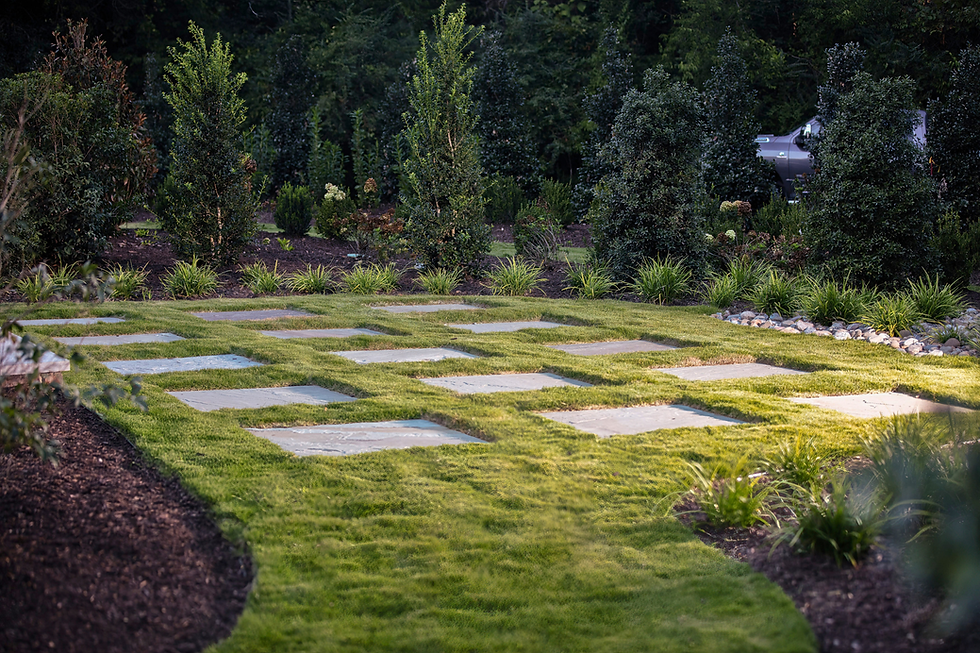
High-end outdoor living spaces often combine several materials: natural stone, concrete pavers, walls, wood, planting, and architectural elements. Using different materials can add character, but the transitions between them need to feel deliberate.
A change in paving might define the edge of a dining area. A stone wall might reinforce a grade change while giving a planting bed structure. A border or band can provide definition without overwhelming the larger patio.
The goal is not to use more materials. It is to make each material feel like it belongs where it has been placed.
Plantings Finish the Edges
Plantings are often thought of as something added around the hardscape after construction. In a well-planned landscape, they are part of the design from the beginning.
Plants can soften the edge of a patio, frame a view, create privacy, guide movement, and help a retaining wall feel integrated into the property. Their mature size and relationship to nearby structures also matter. A planting bed that looks appropriately scaled years from now requires planning beyond the day it is installed.
This is where landscape design becomes more than selecting individual plants. It is about understanding how the planting, architecture, hardscape, and surrounding property will be experienced together.
The Details You Notice Without Thinking About Them
The best transitions are often the ones you barely notice.
You simply walk comfortably from one area to another. A wall feels naturally positioned. A planting bed frames the view instead of blocking it. Lighting follows the path without becoming the focal point. Materials change without making the landscape feel pieced together.
Those details create the sense of quality homeowners experience when a property feels finished and intentional.
At Maplehurst Outdoor Living, we look at the entire property before deciding where individual features belong. The goal is a landscape where patios, walls, plantings, pathways, lighting, and gathering spaces feel considered as part of one cohesive design.
Because sometimes the most important part of an outdoor living space is not the feature itself. It is everything that connects it to the rest of the property.



Comments